Across Brazil, educators and learners are embracing new ways to build the skills needed for a rapidly changing world. From systems thinking to problem-solving and collaboration, Shell NXplorers helps bring these capabilities into the classroom through practical, hands-on learning that connects ideas to real-world challenges.
In Brazil, the programme is helping educators and learners move beyond understanding complex issues to actively creating solutions for their communities. Through strong local partnerships and a focus on educator capability, Shell NXplorers is supporting a generation of young people to think creatively, act with confidence and see themselves as changemakers.
Brazil continues to advance innovation in education, including maker spaces, technology labs and new approaches to teaching and learning. Shell NXplorers complements this momentum by equipping educators with structured methodologies that help turn resources, curiosity and ideas into meaningful learning experiences.
In many education settings, educator are working to translate new resources and learning environments into meaningful classroom experiences. Shell NXplorers supports this by providing structured methodologies and practical tools that help educators bring problem-solving, collaboration and systems thinking to life for learners.
Since coming to Brazil in 2017, Shell NXplorers helps bridge this gap. The programme connects policy with practice, supporting educators and learners to make the most of existing investments through structured, real-world problem-solving principles.
Working in partnership with education departments across Rio de Janeiro and Espírito Santo, the programme strengthens science education and fosters critical thinking, collaboration and creativity: skills that are essential for the future.
Rather than operating in isolation, Shell NXplorers is designed to complement and strengthen existing education systems.
In Rio de Janeiro, the programme aligns closely with the city’s Technological Educational Gymnasiums (GETs) – schools that focus on STEM education, digital culture and project-based learning. As these initiatives scale, Shell NXplorers provides the methodological backbone that helps educators bring them to life in the classroom.
From just one GET participating in 2022 to an incredible 32 in 2026, this growth reflects a deeper integration between public policy and practical implementation.
The programme is also aligned with Brazil’s National Common Curricular Base (BNCC), supporting competencies such as critical thinking, collaboration and digital literacy. For educators, this means Shell NXplorers isn’t an ‘extra’, but a key way to deliver existing curriculum goals in a more engaging and applied way.
At its core, Shell NXplorers is not just about providing educational content – it’s about equipping educators and learners with a way of thinking.
Through tools like systems mapping and feasibility analysis, learners explore real-world challenges, identify root causes and develop solutions that are practical and locally relevant. Importantly, these tools work in both high-tech and low-tech environments, making them accessible across diverse school contexts.
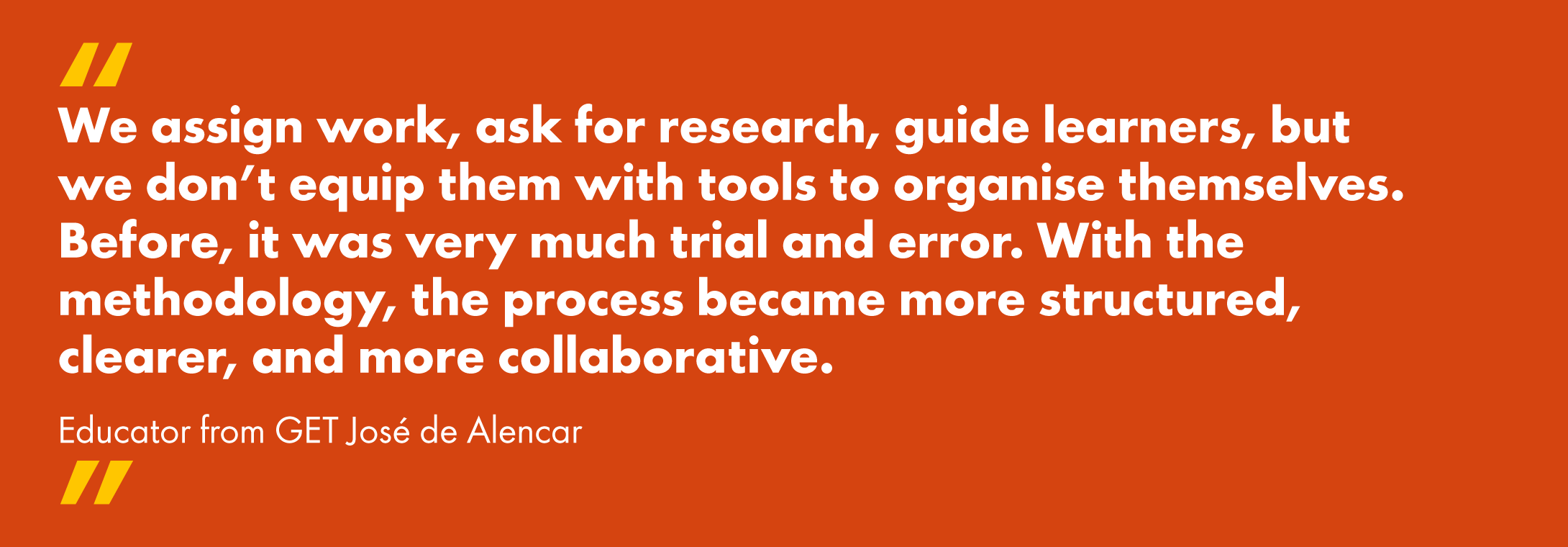
Educators consistently describe the impact as transformative. Many arrive with ideas but lack the structure or confidence to implement them. Through Shell NXplorers, they gain both.
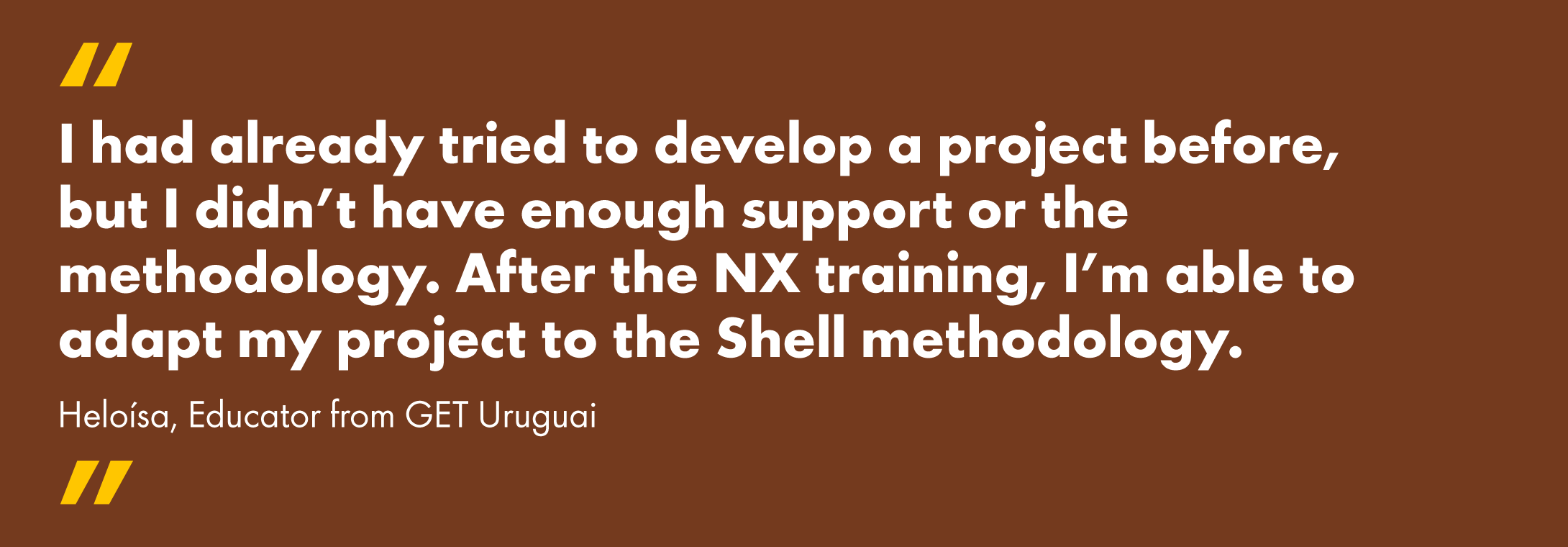
Over time, educators begin to consistently integrate these approaches into other areas of teaching (and even beyond the classroom), embedding a culture of inquiry and collaboration that extends across the school.
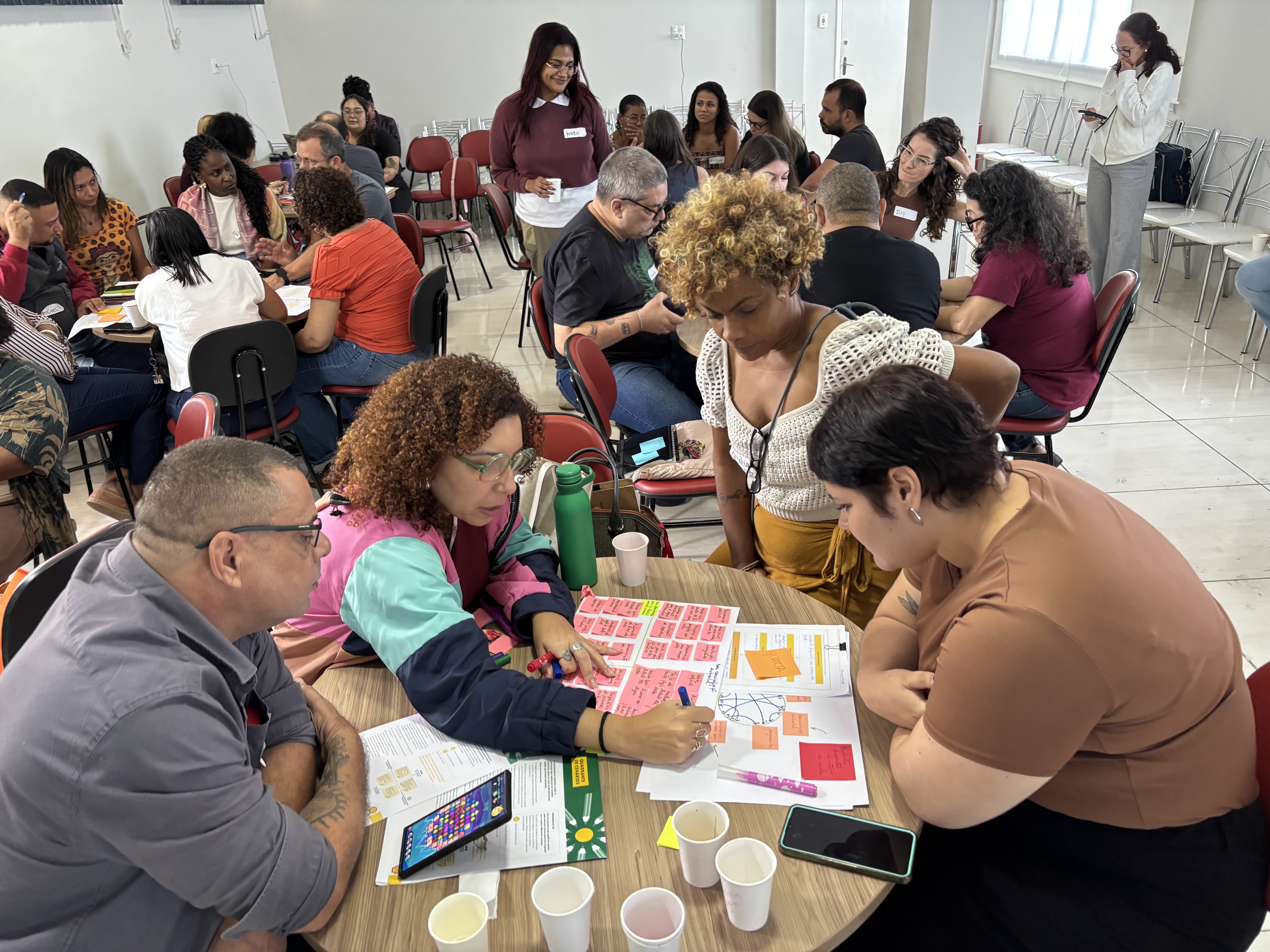
Brazilian educators participating in a Shell NXplorers training session
The ‘Create’ stage of Shell NXplorers is where ideas are transformed into action, and where the shift in mindset becomes tangible. Across Brazil, learners are identifying challenges in their own communities and developing solutions that are both innovative and grounded in everyday reality.
Some stand-out projects include:
At one school, a common everyday issue became an opportunity for change. Learners took action to reduce food waste in their canteen by launching the Food Savers project. They designed a food waste meter that tracks the average amount of food thrown away each day, displaying the data on an LED panel for the entire school community to see.
But they’re not stopping there. The team is now working to expand the project by showing the environmental impact of waste – specifically the amount of water used and CO₂ produced.
“We saw the food we throw away every day. Then we looked at all this waste and decided to act and create the project.”
A group of learners turned textile waste into an opportunity for change by creating ecobags from discarded clothes. Using simple tools and sewing skills, they developed a practical, low-cost solution to reduce waste and promote sustainability.
Their project shows that innovation doesn’t require advanced technology – creativity, reuse, and collaboration are enough. With support of the school community, through Dona Valéria (a school staff member) learners gained hands-on life skills while strengthening community ties and leadership.
In each case, the outcome isn’t just a prototype – it’s a new way of seeing the world. learners begin to recognise that they are not passive observers of problems, but active creators of solutions.
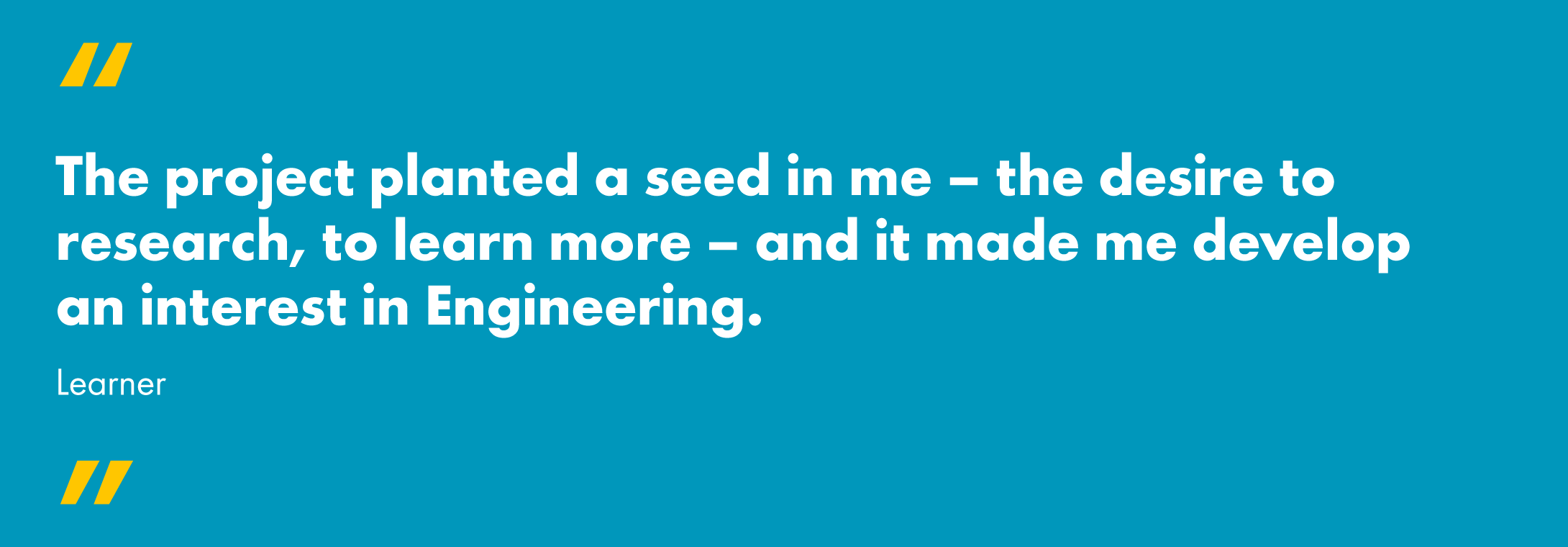
The most powerful impact of Shell NXplorers in Brazil is human. In classrooms where opportunities can feel limited, the programme expands what young people believe is possible. Learners discover new interests, build confidence and begin to imagine futures they hadn’t considered before.
For some, that means aspiring to university or careers in science and engineering. For others, it’s about finding their voice, learning to collaborate, or simply feeling part of something meaningful.
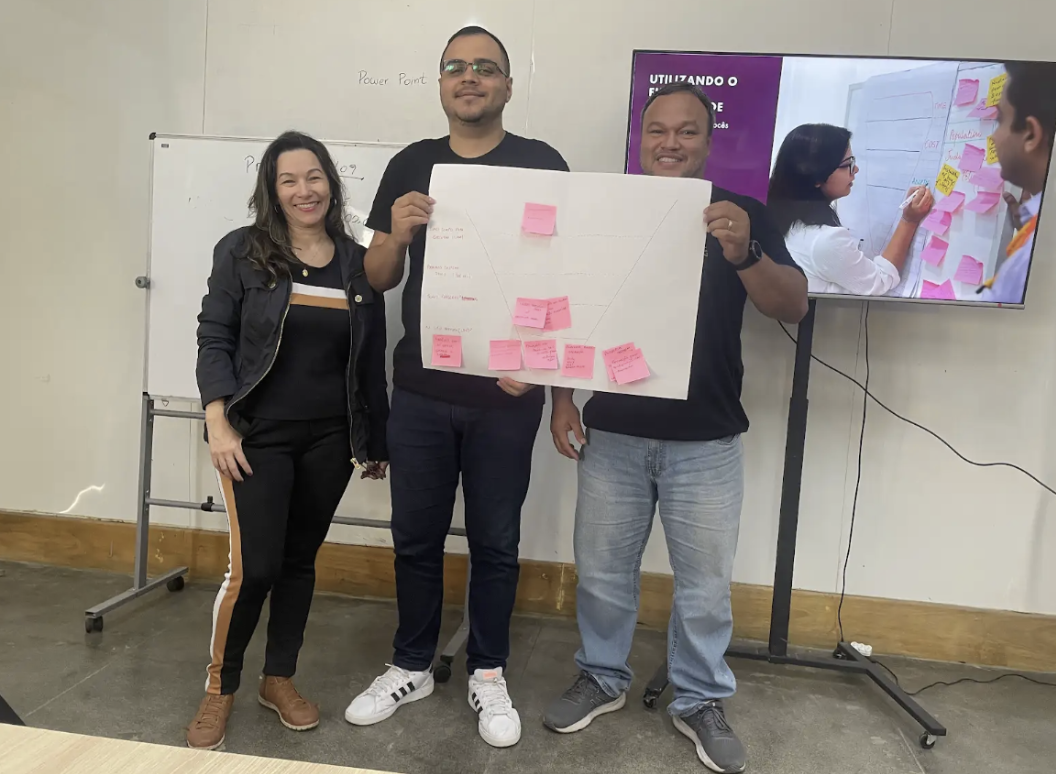
Shell NXplorers Brazil team showcasing their work
Girls are increasingly leading teams and driving projects – challenging traditional gender norms in STEM fields. Learners who were once quiet or disengaged begin to participate actively, contribute ideas and take on leadership roles.
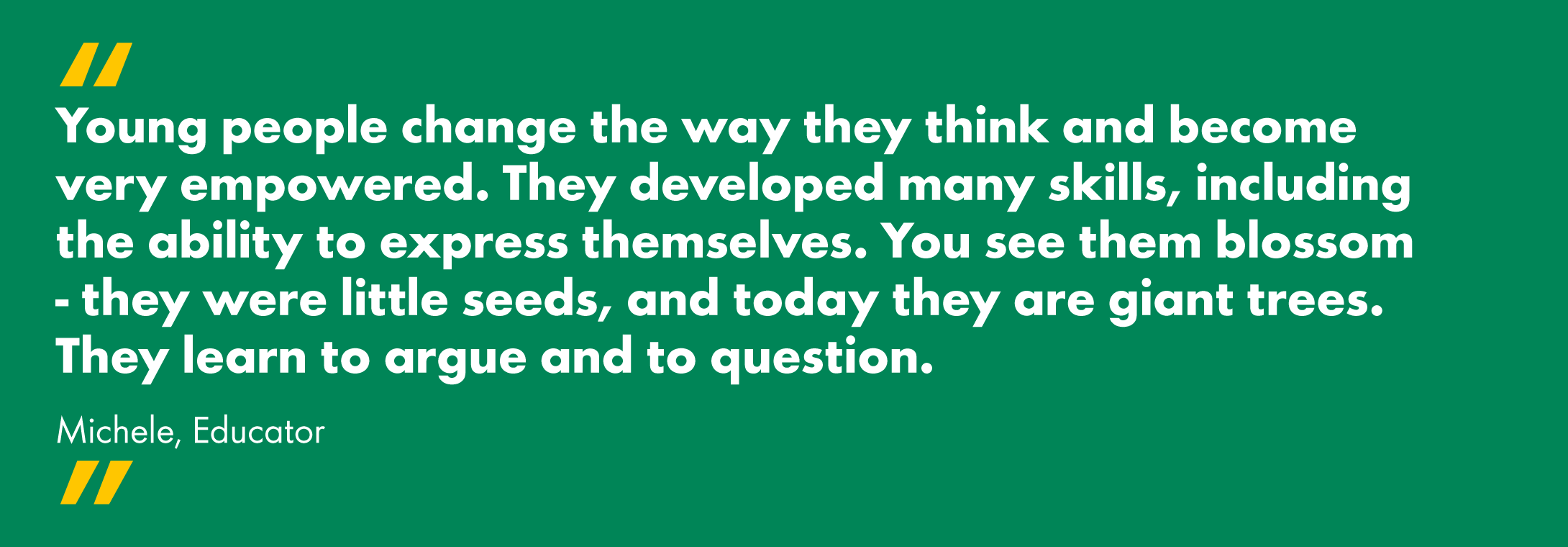
The transformation doesn’t stop with learners. Across participating schools, educators are growing as leaders – building confidence, experimenting with new approaches and helping shape more innovative learning environments.
Some are taking on new roles within their schools, while others are championing the programme’s expansion across their networks. In many cases, Shell NXplorers becomes a catalyst for broader educational change, strengthening not just individual classrooms, but entire school communities.
There is also a strong sense of ownership. Educators adapt and share the methodology with colleagues and younger learners, creating a ripple effect that extends beyond the programme itself.
The success of Shell NXplorers Brazil is rooted in collaboration. Through long-term partnerships with education departments, schools and implementation partner MS Educação, the programme has scaled significantly – reaching hundreds of schools across multiple regions, including underserved and vulnerable communities.
This ecosystem approach ensures that impact is both deep and sustainable. Rather than delivering a standalone intervention, Shell NXplorers strengthens existing systems – connecting global expertise with local knowledge and priorities.
Shell NXplorers Brazil shows the impact of creation in action, young people discovering their potential, educators strengthening their practice, and communities coming together to address real challenges. It is about turning insight into action, and action into opportunity.
In a country as diverse and complex as Brazil, there is no one-size-fits-all approach to strengthening education outcomes. What Shell NXplorers demonstrates is that when the right partnerships, methodologies and mindsets come together, meaningful change is possible.
As more learners, educators and schools join the journey, this story of creation continues, opening new possibilities for the future, one idea at a time.